Oil level looks good. Color looks normal. Then a gearbox bearing locks up halfway through second shift.
Oil analysis is worth it because it's the cheapest, most reliable way to see what's happening inside a running machine. A lab report on a few ounces of oil tells you whether metal is wearing, whether dirt or water is getting in, and whether the oil itself is breaking down. You get that information weeks or months before anything shows up as noise, heat, or a failed part.
Below, we'll cover what a basic oil analysis reveals, how often to test, what to do with the results, and how to start a testing routine with a simple oil analysis kit.
Key Takeaways:
- Testing your oil is testing your equipment. Wear metals, contamination, and oil breakdown all show up in a sample before they show up as a failure.
- In 2022, Schroeder Industries reported that 70 to 90% of hydraulic system wear and failure is contamination-related.
- At Keller-Heartt, we recommend routine sampling every two weeks to three months, based on how critical the machine is.
What Is Oil Analysis, and Why Isn't Checking Level and Color Enough?
Oil analysis is the laboratory testing of a used lubricant sample to evaluate oil condition, detect contaminants, and identify signs of equipment wear. Unlike basic level and color checks, oil analysis measures factors such as viscosity, wear metals, water contamination, and chemical degradation. Oil can look clean and remain at the proper level while still containing harmful contaminants or showing signs of deterioration. By revealing both the condition of the lubricant and the health of the equipment, oil analysis helps maintenance teams identify potential problems before they lead to costly failures.
The particles that do the most damage are often too small to see. Most damaging silt and wear debris in industrial systems is under 40 microns, below what the naked eye picks up. So a sample that looks fine in a bottle can still be grinding down bearings, pumps, and gear teeth.
That's why contamination gets so much attention from reliability engineers. In a 2022 post on contamination control, filtration manufacturer Schroeder Industries reported that 70 to 90% of wear and failure in hydraulic systems is contamination-related.
Our Take: Checking the condition of your oil is checking the condition of your equipment. The oil touches every bearing, gear, and seal in the system, and it carries a record of what's happening to all of them. Analysis is how you read that record.
If you're building out a broader maintenance plan, oil analysis fits right alongside your preventive maintenance schedule for industrial equipment →
What Does a Basic Oil Analysis Reveal?
A basic oil analysis reveals three things: what's wearing inside the machine, what's getting into the oil, and how much life the oil has left. Each one points to a different kind of problem, and together they give you a clear picture of equipment health.
Wear Metals: What's Wearing Down
Wear metals are tiny particles that come off moving parts as they rub, roll, and slide. The lab measures them in parts per million (ppm). The metal tells you where it's coming from. Iron usually points to gears, shafts, or bearings. Copper and tin often come from bronze bushings or thrust washers. Aluminum can mean pump or housing wear.
One high reading isn't always an emergency. A steady climb across several samples is the warning sign you want to catch.
Contamination: What's Getting In
Contamination is anything in the oil that shouldn't be there. The usual suspects are dirt and dust (showing up as silicon), water, process fluids, coolant, and the wrong lubricant topped off by mistake. Water is especially hard on equipment. It cuts film strength, speeds up rust, and helps the oil oxidize faster.
How does dirt get into a closed system? Through worn seals, open fill caps, dirty transfer containers, and breathers that were never upgraded. Contamination results help you find the entry point, not just the symptom.
Oil Degradation: How Much Life the Oil Has Left
Degradation measures the oil itself. Viscosity is the big one. If it drifts too far from spec, the oil can't hold a protective film between moving parts. Labs also check oxidation and acid number, which show the oil is breaking down from heat and age, and additive levels, which show whether the protective package is getting used up.
What a Basic Oil Analysis Measures
|
|
Test area
|
What the lab looks for
|
What it tells you about your equipment
|
|
Wear metals
|
Iron, copper, tin, aluminum, chromium (ppm)
|
Which components are wearing and how fast
|
|
Contamination
|
Silicon (dirt), water, sodium or potassium (coolant), particle count
|
Where outside material is getting in and what's at risk
|
|
Viscosity
|
Change from the oil's rated grade
|
Whether the oil can still protect moving parts
|
|
Oxidation and acid number
|
Chemical breakdown from heat and age
|
Whether the oil is nearing the end of its useful life
|
|
Additives
|
Zinc, phosphorus, calcium, and others
|
Whether the protective additive package is depleted or mixed
|
How Does Oil Analysis Extend the Life of Your Oil and Your Equipment?
Oil analysis helps extend lubricant and equipment life by replacing calendar-based oil changes with condition-based maintenance. Instead of guessing when oil needs to be replaced, you can use test results to make informed decisions that reduce waste, prevent damage, and control maintenance costs.
Avoid Unnecessary Oil Changes and Equipment Damage
Calendar-based oil changes can create two costly problems:
- Changing oil too early: You spend money on replacement oil, labor, and disposal when the existing lubricant is still effective.
- Changing oil too late: Equipment continues operating with degraded or contaminated oil, increasing the risk of wear and failure.
Oil analysis helps you find the right balance by showing the actual condition of the lubricant, so maintenance intervals reflect how your equipment is being used.
Reduce Unplanned Downtime and Repair Costs
The benefits go beyond lubricant savings. By identifying wear particles, contamination, and oil degradation early, oil analysis gives maintenance teams an opportunity to address problems before they cause equipment failure.
According to Siemens' True Cost of Downtime 2024 report:
- $1.4 trillion annually: Estimated unplanned downtime costs for the world's 500 largest companies.
- 11% of revenue: The approximate share of revenue those losses represent.
- 27 hours per month: Average production time lost to unplanned downtime at a large plant.
Even at a smaller facility, one unexpected gearbox failure can lead to significant expenses, including:
- Replacement parts and emergency repairs
- Overtime labor and expedited shipping
- Lost production and missed customer orders
Compared to these costs, routine oil sampling can be a relatively small investment in preventing larger problems.
Identify When It's Time for a Different Lubricant
Oil analysis can also reveal whether you're using the right lubricant for your application. For example, recurring viscosity changes or rapid oxidation may indicate that your current product isn't meeting your equipment's operating demands.
Start catching equipment wear before it leads to costly downtime. Shop the Industrial Oil Analysis Kit (Case of 10).
How Often Should You Test Industrial Oil?
Most industrial equipment should be sampled somewhere between every two weeks and every three months, depending on how critical the machine is and how fast a problem could turn into a failure.
The idea is simple. You want to sample often enough to catch a problem inside its failure development window, the stretch between when a fault starts and when the part fails. For some components, that window is months. For others it's days. The more expensive, harder to replace, or more exposed to contamination a machine is, the tighter your interval should be.
Suggested Starting Oil Sampling Intervals
|
|
Equipment priority
|
Examples
|
Starting interval
|
|
Critical
|
Main hydraulic presses, large gearboxes, compressors with no backup
|
Every 2 to 4 weeks
|
|
Important
|
Production-line hydraulics, conveyor drives, mid-size gear reducers
|
Monthly
|
|
General
|
Backup units, low-load gearboxes, equipment with spares on hand
|
Quarterly
|
Treat these as starting points, not rules. Tighten the interval when results trend the wrong way, after a repair or oil change, or when operating conditions change. Loosen it once a machine shows several stable reports in a row.
Pull a baseline first. Send a sample of new, unused oil from the same drum or tote you're putting into service. That gives the lab, and you, a clean reference point to compare future samples against.
What Should You Do With Your Oil Analysis Results?
Use your results to sort each machine into normal, caution, or critical, then act on the trend, not a single number. One sample is a snapshot. Three or four samples from the same sampling point show you the direction things are moving, and that's what tells you when to step in.
Most lab reports flag results by severity. Here's a practical way to respond to each level.
How to Act on Oil Analysis Results
|
|
Result
|
What it usually means
|
What to do
|
|
Normal
|
Wear, contamination, and oil condition are within limits and stable
|
Keep your current interval and file the report for trending
|
|
Caution
|
One or more values are rising or slightly out of range
|
Resample sooner, check seals, breathers, and filters, and look for the source
|
|
Critical
|
Sharp jump in wear metals, high water, or oil well out of spec
|
Schedule an inspection or repair, change or filter the oil, and confirm with a follow-up sample
|
A few habits make results more useful:
- Pull from the same point every time. Moving the sampling point changes the numbers and breaks the trend.
- Sample while the machine is running or just after it stops. Particles settle fast in a cold reservoir.
- Record everything. Note oil type, hours since last change, and any top-offs or repairs on each sample.
- Close the loop. When a report leads to a fix, resample afterward to confirm it worked.
Our Take: The plants that get the most out of oil analysis aren't the ones running the most tests. They're the ones that send samples on a schedule, read every report, and act on what's trending. A testing routine nobody looks at is just paperwork.
When contamination is the issue, your next step is usually better filtration or sealing. Our guide to preventing hydraulic oil contamination walks through the most common entry points.
How Do You Start an Oil Analysis Program With an Oil Analysis Kit?
The easiest way to start is with a ready-to-use oil analysis kit and a short list of your most important machines. You don't need a full reliability team or a lab on site. You need a plan, a few sample bottles, and the habit of sending them on schedule.
- Pick your first five to ten machines. Start with the equipment that would hurt most if it went down.
- Set one sampling point per machine. Choose a spot in the oil's active flow, after the hottest components and before the filter where possible.
- Pull a baseline. Test new oil from your supply so you have a clean reference.
- Label and send. Record the machine, oil type, hours on the oil, and date on every sample.
- Trend and act. Compare each new report to the last few and adjust intervals as you learn.
Keller-Heartt's Industrial Oil Analysis Kit is built for exactly this kind of routine. It's designed for manufacturing plants, data centers, power and utility providers, facility maintenance teams, and other operations where uptime matters. Each sample comes back with actionable reporting you can use to schedule maintenance at the right time. A case of 10 covers your first round of critical equipment, or several rounds on a smaller list. Single kits are also available if you'd rather start small.
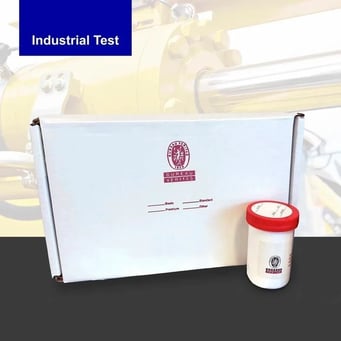
Running more than one facility? The program is set up for multi-site teams too, so you can keep testing consistent from plant to plant.
Need help building a testing routine or choosing which machines to start with? Talk with our team, or call 1-800-423-7513.
Is Oil Analysis Worth It for Your Plant?
For most plants, yes. Oil analysis turns a few ounces of used oil into a clear read on wear, contamination, and oil life, so you can fix small problems before they become big ones. It helps you get the full usable life out of your oil and out of the machines running on it.
Start with your most critical equipment, sample on a steady schedule, and act on the trends. When you're ready to set up your first round, grab an Industrial Oil Analysis Kit or talk with our team about building a routine that fits your operation.
Frequently Asked Questions About Oil Analysis
How much does oil analysis cost?
Oil analysis usually costs far less than the repairs it helps prevent. Keller-Heartt's Industrial Oil Analysis Kit runs $136.50 for a case of 10, or about $13.65 per sample. Compare that to the parts, labor, and lost production from one unplanned gearbox or pump failure, and the math is easy.
Is oil analysis worth it for smaller plants?
Yes. Smaller plants often have less backup equipment, so one failure can stop a whole line. Starting with five to ten critical machines keeps costs low while covering the equipment that matters most. Single kits are available too, so you can start small and grow the program as you see results.
Can oil analysis predict equipment failure?
Oil analysis can flag many failures early by showing rising wear metals, contamination, or oil breakdown weeks or months ahead. It works best when trended over several samples.
How do you take an oil sample for analysis?
Take samples from the same point every time, while the machine is running or right after it stops. Use a clean bottle, flush the sampling valve first, and fill to the line. Label each sample with the machine, oil type, hours on the oil, and date so the lab can trend results accurately.
Does oil analysis tell you when to change oil?
Yes. Viscosity, oxidation, acid number, and additive levels show whether the oil can still protect your equipment. That lets you move from calendar-based changes to condition-based changes, so you aren't draining good oil early or running worn-out oil too long.
How often should industrial oil be tested?
At Keller-Heartt, we recommend routine sampling every two weeks to three months for most industrial equipment. Critical machines with no backup should be tested at the shorter end of that range, while general equipment with spares on hand can often go quarterly. Tighten intervals whenever results start trending in the wrong direction.


