BlueDEF
Better to be Blue: Improving Diesel Engines With BlueDEF®
Not all diesel exhaust fluid is the same. Learn how to improve your diesel engine performance with BlueDEF® from Keller-Heartt Oil.
Yes, DEF freezes. Diesel exhaust fluid turns solid at 12°F, and on a January morning in the Midwest, that doesn't take long. The good news? Your truck is built for it. The SCR system warms the DEF tank and lines at startup, and the fluid goes back to full strength once it thaws.
Where fleets run into issues is everything around the truck: totes that crack, pumps that freeze, fluid that gets contaminated when someone rushes a thaw on the job site, and dosing systems that crystallize after a winter of short runs.
This guide covers how to handle frozen DEF safely, how to set up heaters and pumps for freeze-thaw cycles, and the warning signs that your SCR system is heading toward a derate.
DEF freezes at 12°F (-11°C), but freezing alone won't hurt the fluid or your truck. DEF's 32.5% urea blend freezes and thaws at the same rate, so it never ends up too concentrated or too diluted along the way.
Diesel Exhaust Fluid (DEF) is a nontoxic mix of about 32.5% high-purity urea and 67.5% deionized water. It's sprayed into the exhaust stream to help cut nitrogen oxide (NOx) emissions.
Engine makers planned for winter from day one. In its DEF guide for operators, Cummins explains that frozen DEF doesn't affect startup or operation because the SCR system heats the tank and lines once the engine is running.
Selective Catalytic Reduction (SCR) is the aftertreatment system that doses DEF into hot exhaust, where a catalyst converts NOx into harmless nitrogen and water vapor.
DEF freezes at 12°F, but frozen DEF doesn't stop a diesel truck from starting or running. Modern SCR systems heat the DEF tank and supply lines after startup, and because the urea and water freeze and thaw together, thawed DEF works just like fresh fluid.
So if the fluid itself is fine, why do so many fleets lose time to DEF problems every winter? That's what the rest of this guide covers.
For the basics on shelf life and storage conditions, see our guide on best practices for storing DEF.
Winter DEF problems almost always start with equipment and handling, not the fluid. These are the most common failure points:
Our Take: Construction fleets have a tougher winter setup than over-the-road trucking. A tote parked at a remote site may sit for days in single digits with no heated building and limited power. The thawing and heating plan has to work at the job site, not just at the shop.
The safest way to thaw DEF is slowly, with the container sealed, using gentle, even heat. You're trying to bring it back to liquid without letting anything in and without overheating it.
Frozen DEF Handling: Do's and Don'ts |
|
|---|---|
|
Do |
Don't |
|
Use an insulated heating blanket with a thermostat |
Use open flames, torpedo heaters, or heat guns |
|
Keep the cap and valve sealed while it thaws |
Add water to "speed things up" |
|
Leave headspace in containers for expansion |
Add antifreeze, alcohol, or any additive |
|
Thaw in a clean, sheltered area |
Dispense through a pump that's still frozen |
|
Check clarity and concentration before use |
Assume a cracked tote is still sealed |
To thaw frozen DEF safely, keep the container sealed and use slow, even heat such as an insulated heating blanket. Never add water, antifreeze, or other additives, and avoid open flames. Once DEF thaws fully, it can be used normally as long as it wasn't contaminated.
Use this chart as a quick reference for storing and heating DEF in winter.
DEF Winter Storage and Temperature Reference |
|
|---|---|
|
Factor |
Recommendation |
|
DEF freezing point |
12°F (-11°C) |
|
Expansion when frozen |
About 7%; leave headspace in every container |
|
Ideal storage range |
15°F to 77°F |
|
Upper heat limit |
Avoid long-term storage above 86°F, where DEF breaks down faster |
|
Heater setpoint |
About 70°F |
|
Typical 330-gallon tote heater |
Insulated wrap blanket, about 1,440W at 120V, preset thermostat |
|
Container materials |
HDPE plastic or stainless steel (no copper, brass, or zinc) |
|
Parked vehicle tanks |
Keep them either full or empty for long-term winter storage |
|
Freeze-thaw cycles |
No quality loss when the fluid stays sealed and clean |
Size heaters to keep DEF in a moderate range of around 70°F, and protect the pump and dispensing line as well as the tote. A warm tote doesn't help if the hose feeding the nozzle is frozen solid.
Tip: Watch out for high-temperature settings. Some tote heaters can reach 145°F, which is great for viscous oils but bad for DEF. Too much heat speeds up urea breakdown, shortens shelf life, and can lead to the ammonia smell that signals degrading fluid.
Our Take: On remote job sites, power is often the limiting factor. Before winter hits, confirm you have a dependable outlet or generator circuit for each tote heater. If you don't, plan smaller, more frequent DEF deliveries, or keep totes at the yard and send fluid out as you need it.
For winter DEF storage, use an insulated heating blanket with a thermostat set around 70°F, and protect pumps and hoses as well as the tote. Avoid high-temperature heater settings, because heat above 86°F speeds up urea breakdown and shortens DEF shelf life.
The clearest sign of DEF crystallization is a white, crusty buildup around the dosing injector, often paired with pressure faults or SCR warning lights. Catch it early, and it's usually a cleaning and seal job. Ignore it, and it can turn into a derate.
DEF crystallization is the buildup of solid urea deposits that form when DEF evaporates, is over-concentrated, or sits in lines and fittings. Crystals can restrict flow and clog injectors.
Signs of DEF crystallization you can see:
Signs your drivers will notice:
Why does winter make this worse? Short runs and cold starts often keep the system from finishing its shutdown purge, so DEF sits in the lines. It’s best to wait about 60 seconds after shutdown before turning off the battery so the fluid can drain back to the tank.
Fall PM checklist for SCR systems:
Stock up before the first freeze. The BlueDEF Premium DEF 330-Gallon Tote is API certified, meets ISO 22241, and ships free, so your fleet has a full winter supply on hand before roads and job sites lock up.
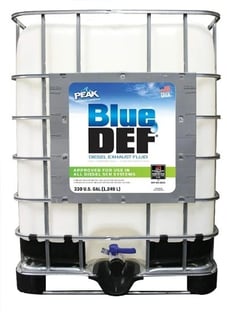
DEF freezing isn't the problem. Unprepared equipment is. Leave room for expansion, thaw gently with the container sealed, keep heaters near 70°F, and give tank heaters and injectors a check before winter starts. Those steps keep frozen fluid from turning into downtime.
If you're setting up bulk DEF storage or need help choosing the right heater and dispensing equipment, talk with the Keller-Heartt team.
For more seasonal prep, see our list of antifreeze and other essential fleet fluids to stock up on for winter, or browse all diesel exhaust fluid options.
DEF freezes at 12°F (-11°C). That's the lowest freezing point of any urea and water mix, which is why DEF is blended at exactly 32.5% urea. Keller-Heartt recommends storing DEF between 15°F and 77°F, and using insulated heating blankets on totes kept outdoors through winter.
Yes. DEF that's been frozen and fully thawed works just like fresh fluid, as long as it stayed sealed and clean. Keller-Heartt suggests checking clarity and concentration, if you can, before using thawed DEF.
No. Frozen DEF won't stop a modern diesel truck from starting or running, because the SCR system heats the tank and lines after startup. Damage usually comes from failed tank heaters or lines that didn't purge, which is why Keller-Heartt recommends checking SCR heaters during fall maintenance.
No. Adding water, antifreeze, alcohol, or any additive changes DEF's concentration and purity, which can damage the SCR catalyst and trigger fault codes. Keller-Heartt recommends protecting DEF with insulated storage and heating blankets instead of trying to change the fluid itself.
Store DEF in sealed HDPE or stainless steel containers, leave headspace for expansion, and keep it indoors or under an insulated heating blanket set around 70°F. Keller-Heartt also recommends keeping parked vehicle DEF tanks either full or empty for long-term winter storage.
DEF generally lasts one to two years when it's stored sealed, out of direct sunlight, and within a moderate temperature range. Heat shortens shelf life more than cold does. Keller-Heartt's DEF storage guide covers how to spot degraded fluid.


Not all diesel exhaust fluid is the same. Learn how to improve your diesel engine performance with BlueDEF® from Keller-Heartt Oil.
Learn how much DEF your fleet requires to run optimally.
With the rising popularity of diesel exhaust fluid (DEF) comes ample questions about this vital automotive fluid. Read on for answers to our FAQs.